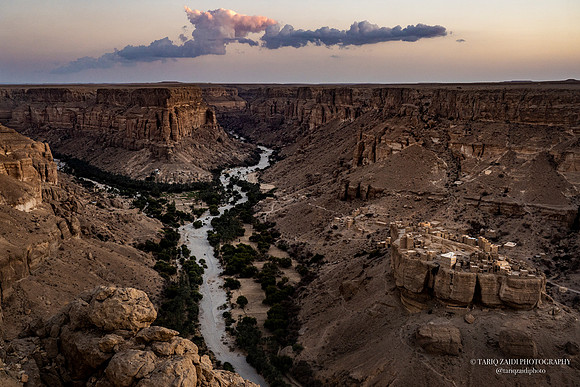
Mud-brick village, Wadi Dawan in central Yemen, Hadhramaut province. Yemen does not have any permanent rivers, but it does have numerous wadis – a permanently or intermittently dry riverbed. For people living away from the coast, wadis are their only source of water. These areas are surrounded by vast deserts and resources are limited. Each house consists of mud bricks with wooden floors that separate one story from another, but while buildings made from earth are often associated with primitive mud huts, these structures are as innovative as they are sophisticated. They’re also incredibly versatile, not least because they have to withstand the rainy seasons that threaten to wash them away.
The tiny 500-year-old mud-brick village of Haid Al-Jazil (right of photo) stands perched on a rock in the Dawan Valley in central Yemen, Hadhramaut province. Once home to hundreds of people, in the past three decades many locals have relocated to Saudi Arabia where the salaries and lifestyle are more appealing. Those who stayed behind are mostly children or the elderly. A 2004 census found just 17 people living in the village, 10 of which were members of the AlAmoudi family. The village of Haid al Jazil dates back to the 16th century. Today Haid Al-Jazil, has just one resident who looks after the village. Years of heavy rains, erosion and a lack of regular upkeep have left almost 70 per cent of homes in ruins.